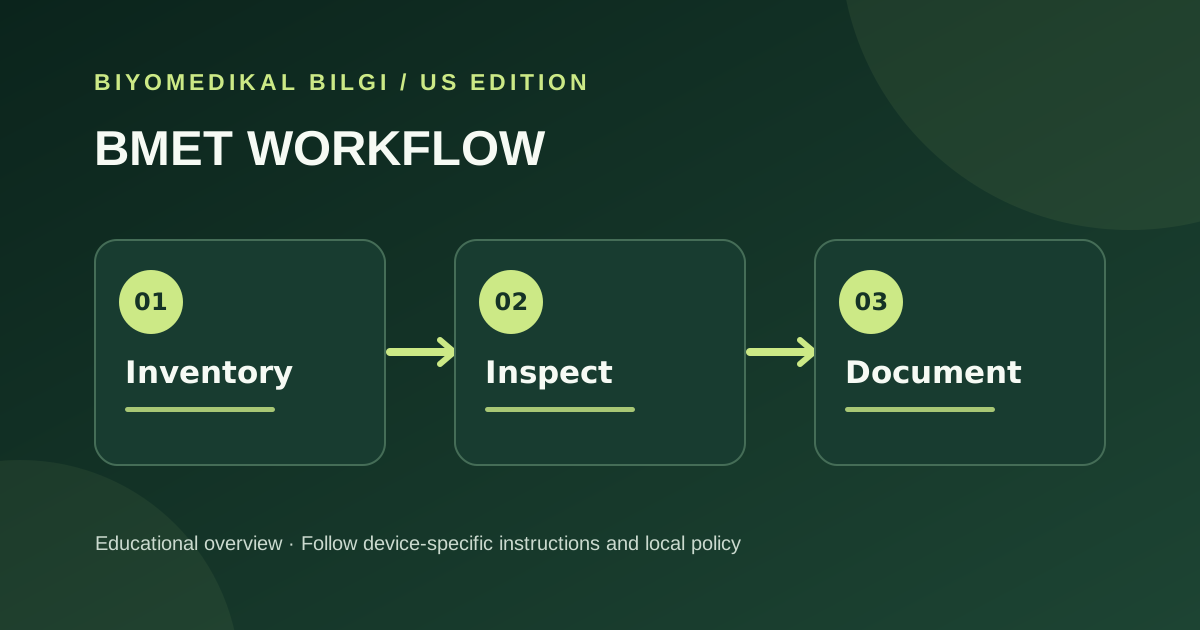
 BMET careers
What Does a Biomedical Equipment Technician Do?
A practical look at BMET responsibilities in US hospitals, from equipment inventory and preventive maintenance to documentation and cybersecurity coordination.
Practical, source-linked guides for biomedical equipment technicians, clinical engineering teams, and readers of US medical device regulation.
What the role covers, how maintenance records work, and where FDA and CMS guidance fit.
What Does a Biomedical Equipment Technician Do?OUR APPROACHClear definitions · Original workflows · Primary sources · Visible corrections
Use these guides to plan questions and records. Always follow the exact device manufacturer instructions and your facility’s approved process.
BMET careersA practical look at BMET responsibilities in US hospitals, from equipment inventory and preventive maintenance to documentation and cybersecurity coordination.
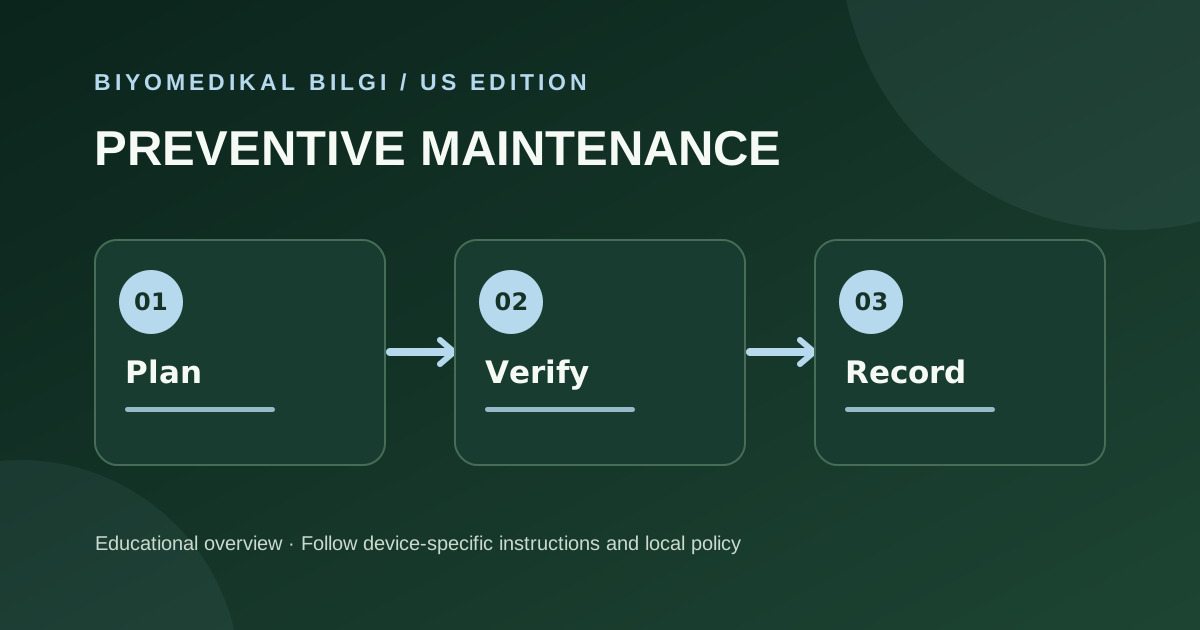 Equipment management
How US healthcare technology teams organize preventive maintenance around device risk, manufacturer instructions, records, and follow-up.
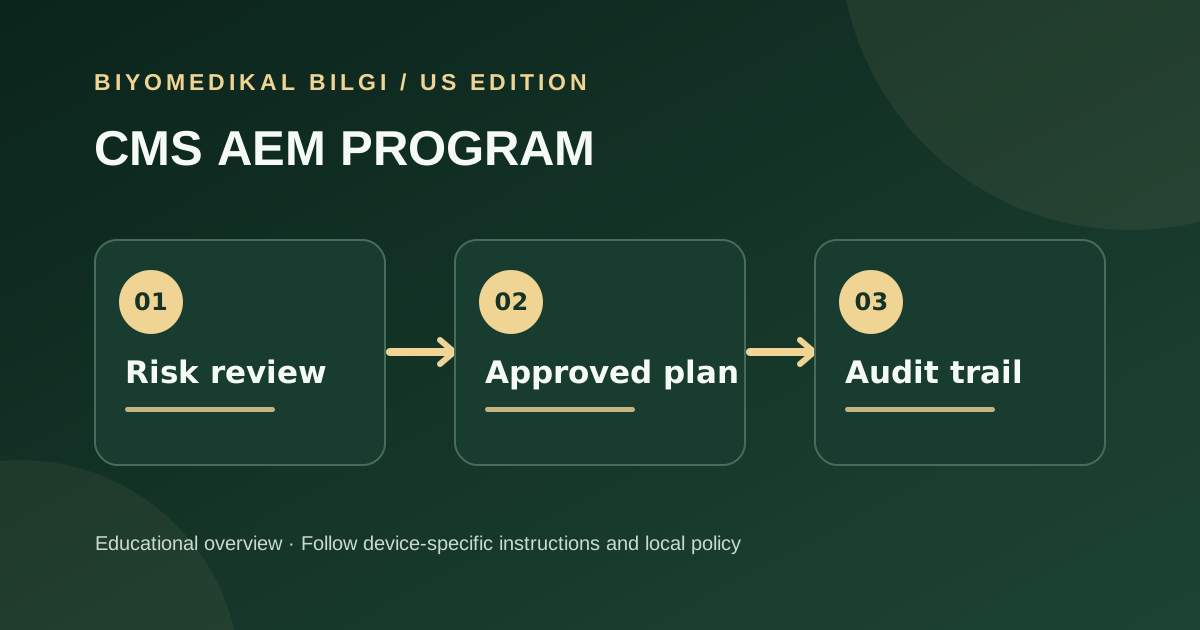 US compliance
An educational overview of the US CMS AEM framework, risk assessment, exclusions, and records for hospital equipment maintenance.
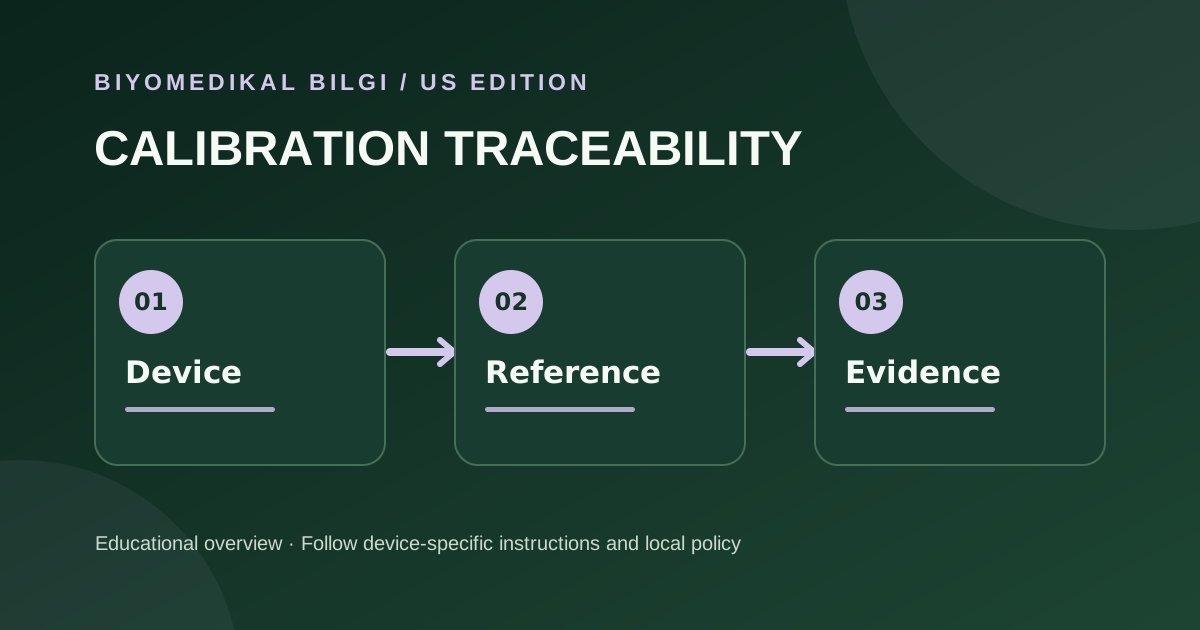 Calibration
What calibration records should prove, why uncertainty matters, and how NIST defines traceability of a measurement result.
 Device guides
A technical overview of infusion pump functions, safety features, failure categories, and service documentation based on FDA resources.
 Device guides
A BMET-oriented intake framework for reported infusion pump problems, without model-specific repair instructions or clinical dosing advice.
 Device guides
An inventory, inspection, test, and escalation framework for patient monitors used by healthcare technology teams.
 Device guides
A practical AED readiness framework for facility teams, grounded in FDA information and manufacturer-specific instructions.
 Device guides
FDA-described pulse oximeter limitations and a careful way to investigate a reported reading discrepancy.
 Equipment management
How equipment inventory, vendor notices, software versions, and IT coordination support safer connected medical devices.
Plain language explanations grounded in published FDA material.
 FDA and regulation
How the FDA groups US medical devices by regulatory controls, and why class alone does not answer every marketing or service question.
 FDA and regulation
A plain-English explanation of substantial equivalence, FDA clearance, and how to verify claims about a US medical device.
 FDA and regulation
A practical introduction to the FDA unique device identification system for inventory, recalls, and device records.
 FDA and regulation
A repeatable recall-review workflow for US hospital equipment inventories, with attention to model, lot, serial, and corrective action.
 FDA and regulation
What MAUDE contains, how BMETs and researchers can use it, and why reports do not establish incident rates or causation.
Send the page link and the source you believe should change it. We log corrections and distinguish technical information from clinical guidance.