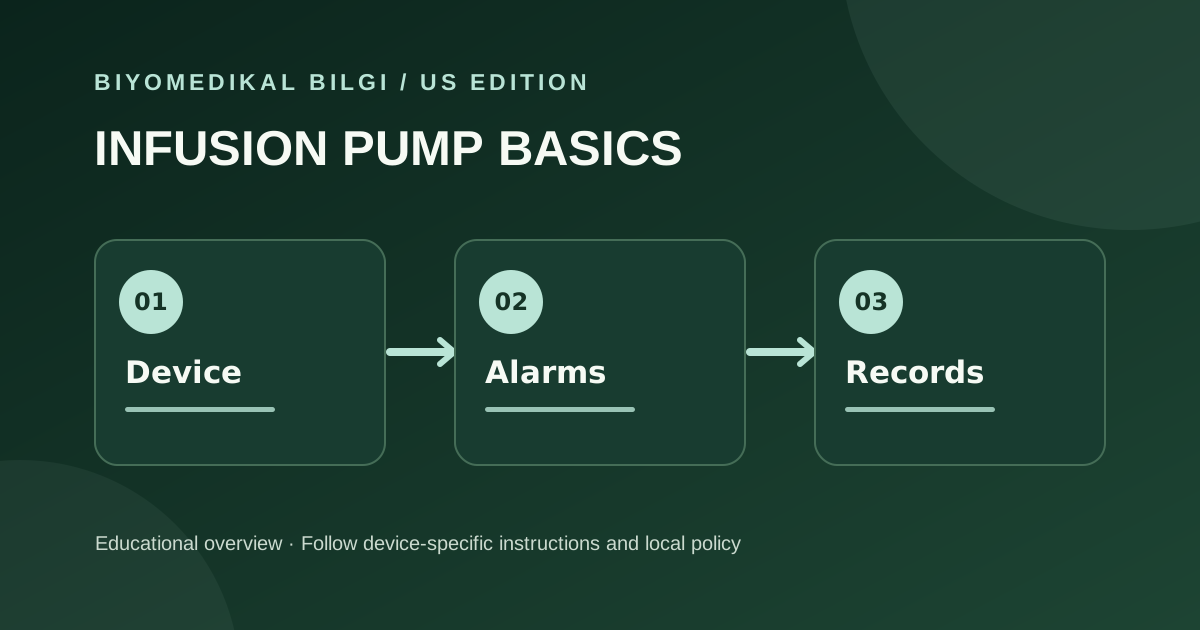
An infusion pump delivers fluids in controlled amounts. For a BMET, the key task is to verify that the specific pump and its accessories operate as the manufacturer specifies, while documenting alarms, flow concerns, power, and software status.
The device and its safety layers
Infusion pumps may deliver medications, nutrients, or other fluids. Designs vary, but the FDA notes that many have alarms or alerts for conditions such as air in tubing or an occlusion. Smart pumps may add software-based safety limits. Those features supplement, rather than replace, clinical checks and appropriate training.
Common reported problem categories
FDA examples include software faults, interface confusion, alarm failures, damaged doors or latches, battery failures, and electrical or mechanical problems. These categories are useful for organizing an intake report. They do not tell you the root cause of a particular device failure.
A service intake that preserves evidence
Record the model, serial number, software version, accessory or administration set, exact alarm text, circumstances reported by the clinical team, and whether the unit was removed from service. Avoid testing a suspect unit on a patient. Follow the current manufacturer procedure and facility reporting policy.
What to publish in a service note
A useful service note states what was observed, which approved test was run, the result, parts changed, firmware actions, and who approved return to service. Do not publish a universal flow-accuracy threshold: acceptable limits and test setup vary by pump and manufacturer.
Practical decision aid
- Identify the exact pump model, software revision, battery, and administration set involved. A test result may not transfer to another configuration or disposable set.
- Distinguish an alarm reported by a user from an alarm reproduced under approved test conditions. Capture both, including the setup and any limits of the reproduction.
- Check the current manufacturer procedure and active safety notices before testing or returning a pump to use; the web overview intentionally provides no universal acceptance threshold.
Primary sources
We reviewed the following original agency publications for this guide. Check the linked source for its latest version and any device-specific updates.
Educational technical information only. It does not replace a manufacturer service manual, hospital policy, regulatory advice, or a clinician’s judgment.
See an error? Request a correction.