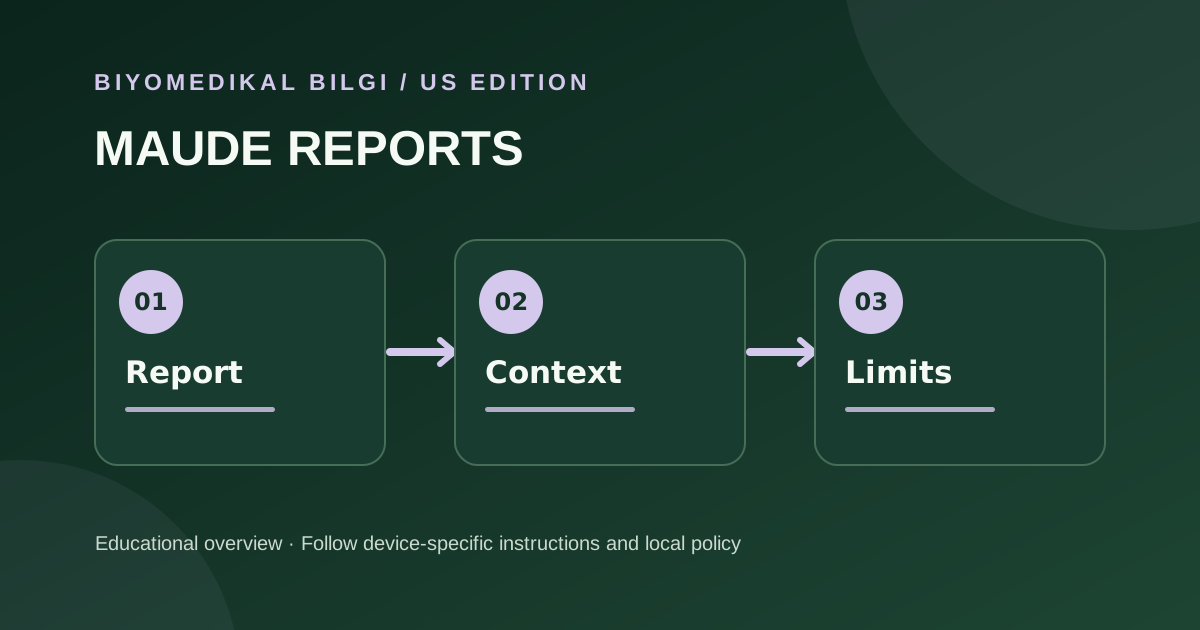
MAUDE is the FDA database of medical device reports about adverse events. It can surface reported problems and device identifiers, but a report is not proof that the device caused the event and cannot be used alone to calculate an event rate.
What is in the database
FDA states that MAUDE contains medical device reports from manufacturers, importers, user facilities, and voluntary reporters. Entries may include device and patient problems, product codes, and some UDI information. Search results are a starting point for investigation.
Interpret the limitations
Reporting is incomplete and variable. Reports can contain missing details, duplicates, preliminary information, and differing terminology. Without a reliable count of devices in use and exposure, the number of reports does not provide a valid failure rate.
A sound review workflow
Identify the exact model and product code, read the event narrative and dates, check whether follow-up reports exist, compare manufacturer and FDA notices, and document uncertainty. A cluster of similar reports can justify further review, but not an unsupported safety conclusion.
Use it with other evidence
Pair MAUDE with your facility’s service records, manufacturer notices, recall information, and approved risk process. Protect patient information when discussing an internal incident.
Practical decision aid
- When reading a report, capture the event date, report date, exact device identity, narrative, and whether the record was supplemented later.
- Look for duplication and missing denominator information before discussing patterns. A count of reports is neither a probability nor a comparative failure rate.
- Use MAUDE to formulate a question for investigation, then cross-check recalls, manufacturer notices, and local service evidence.
Primary sources
We reviewed the following original agency publications for this guide. Check the linked source for its latest version and any device-specific updates.
Educational technical information only. It does not replace a manufacturer service manual, hospital policy, regulatory advice, or a clinician’s judgment.
See an error? Request a correction.