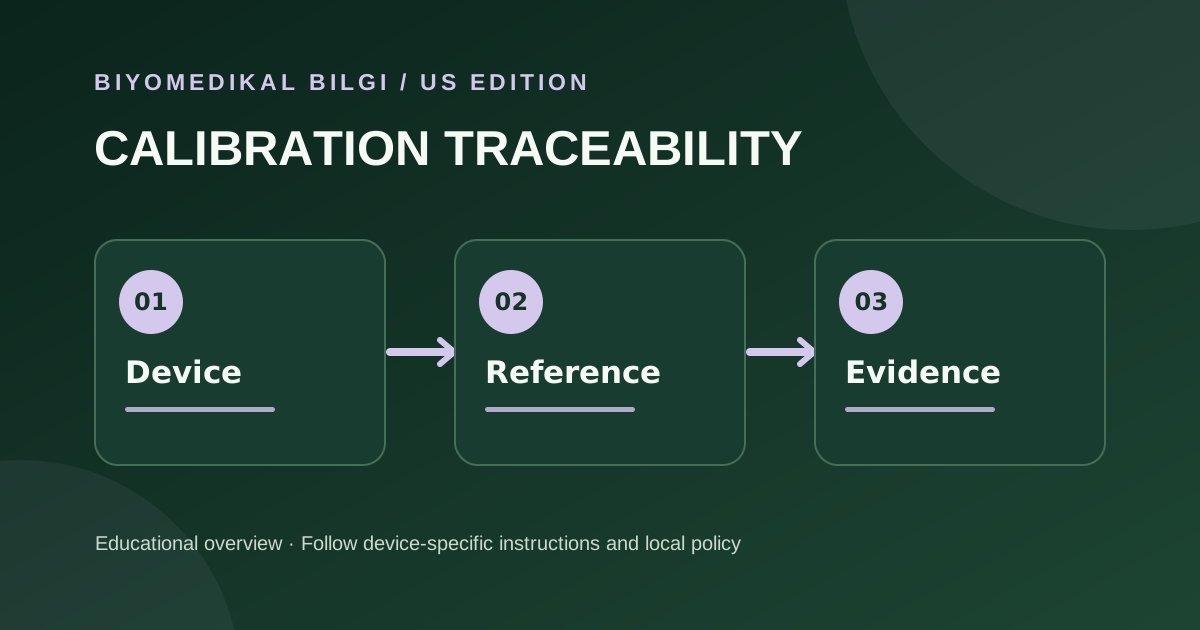
Calibration compares an instrument’s indication with a reference under stated conditions. Metrological traceability belongs to the measurement result: it requires a documented, unbroken chain of calibrations to a reference, with uncertainty accounted for at each link.
Calibration is not the same as adjustment
A device can be measured before adjustment, adjusted if authorized, and measured again. These are separate events. A certificate that reports only “pass” may be inadequate for a decision that depends on a numeric tolerance, uncertainty, or an as-found condition. Preserve the relevant readings and procedure.
What traceability actually means
NIST cautions that traceability is a property of a measurement result, not a sticker, instrument, or laboratory. The chain of comparisons and uncertainties must be documented. A marketing statement that equipment is “NIST traceable” is not, on its own, proof that a particular result meets the required uncertainty.
A practical record review
Check the device identity, reference instrument and its calibration status, environmental or setup conditions when material, measurement points, as-found and as-left data, acceptance criteria, uncertainty where required, technician, and date. Then check the manufacturer’s service instructions and the facility’s quality system for any additional requirements.
Use the result responsibly
Passing one measurement point does not prove every operating mode is within specification. Likewise, a failed result needs a documented impact assessment, not an automatic assumption about prior patient care. Escalate such decisions through the facility’s quality and clinical processes.
Practical decision aid
- Separate the questions “Was it measured?”, “Was it adjusted?”, and “Does the result meet this device’s acceptance criteria?” A calibration label alone does not answer all three.
- When a certificate is used as evidence, check the exact reference, measurement range, date, uncertainty where relevant, and whether the data cover the point you actually tested.
- If an as-found result is outside tolerance, preserve the evidence and escalate the impact assessment through the approved quality process rather than retrospectively assuming a clinical outcome.
Primary sources
We reviewed the following original agency publications for this guide. Check the linked source for its latest version and any device-specific updates.
Educational technical information only. It does not replace a manufacturer service manual, hospital policy, regulatory advice, or a clinician’s judgment.
See an error? Request a correction.