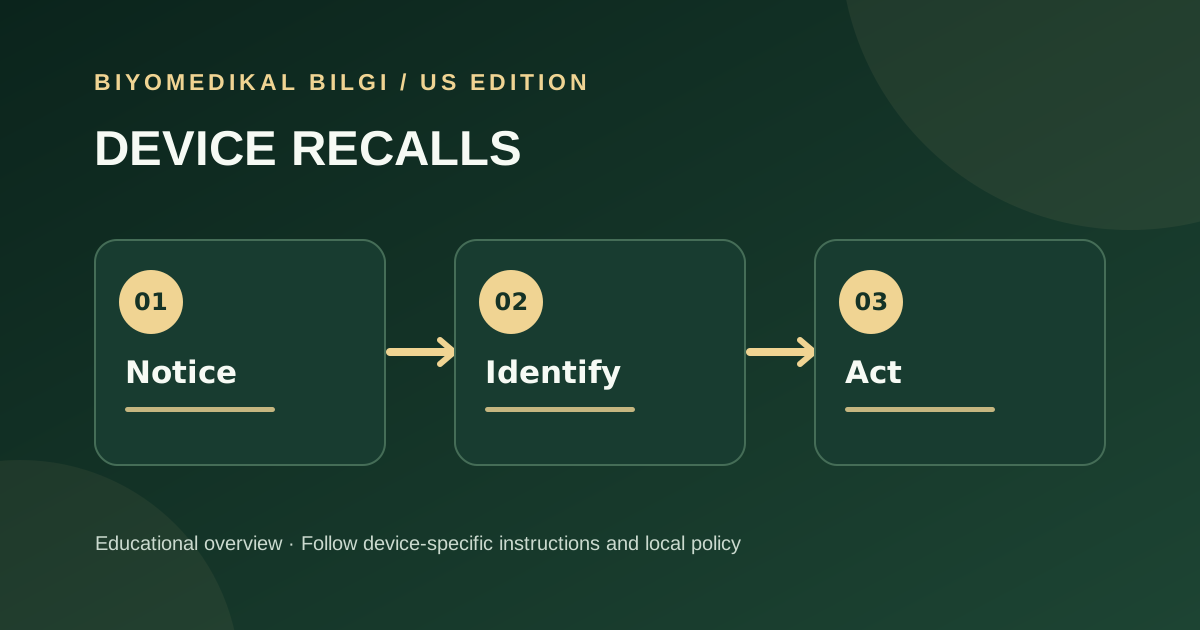
A recall review matches an FDA or manufacturer notice to the actual devices in a facility, then records the required action and completion. A device family name alone is rarely enough; the affected model, lot, serial, UDI, or software version may control scope.
Find the authoritative notice
Start with the FDA medical device recalls and early alerts page and the manufacturer’s notice. Record the publication or update date, product, affected identifiers, reason, and prescribed action. An early alert and a classified recall are not identical statuses.
Match your inventory
Search model, serial, lot, UDI, location, and software version as applicable. Do not mark all devices of a brand as affected or unaffected without matching the notice criteria. Where records are incomplete, inspect the physical label and document the uncertainty.
Track the response
Assign an owner, quarantine or communicate where required, complete the manufacturer action, and retain evidence of resolution. Include accessories and devices on loan or in storage. Review new information when the FDA or manufacturer updates a notice.
Reporting versus recall
A recall is a corrective action process. An adverse-event report in MAUDE is a different type of information and does not by itself establish causation or recall scope. Use each source for its proper purpose.
Practical decision aid
- Save the date and version of the notice you reviewed, because a manufacturer or FDA update can change affected identifiers or actions.
- Match the scope to individual assets and record “not affected” with supporting identifiers; a brand-level search is not sufficient evidence.
- Track completion through to the final manufacturer action and clinical-owner communication. Finding the notice is only the first step.
Primary sources
We reviewed the following original agency publications for this guide. Check the linked source for its latest version and any device-specific updates.
Educational technical information only. It does not replace a manufacturer service manual, hospital policy, regulatory advice, or a clinician’s judgment.
See an error? Request a correction.