A biomedical equipment technician (BMET) installs, inspects, maintains, and repairs medical equipment. In a hospital, the job also involves service records, communication with clinical teams, and escalating problems that could affect patient safety.
What a BMET is responsible for
The US Bureau of Labor Statistics describes medical equipment repairers as workers who install, maintain, and repair patient-care equipment. The work spans testing, calibration, preventive maintenance, troubleshooting, records, and user support. Job titles vary by employer: BMET, biomedical equipment technician, medical equipment repairer, and healthcare technology management technician may cover overlapping duties.
A real equipment workflow
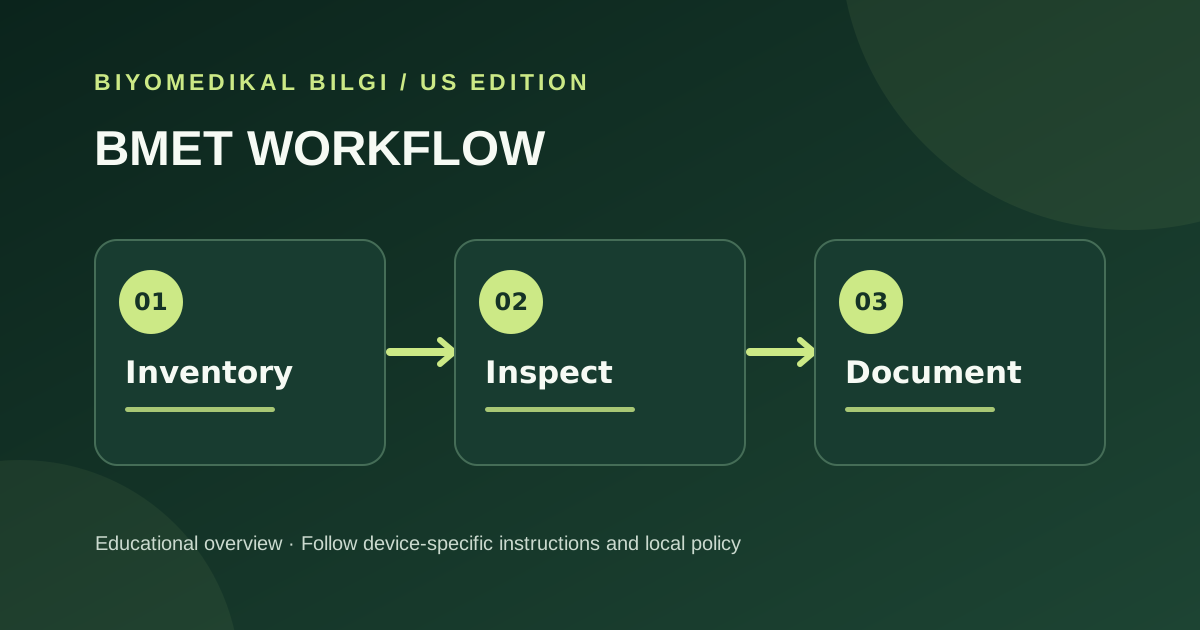
A useful way to understand the job is to follow one device through its life. On receipt, the team identifies the model and serial number, records the equipment in an inventory, checks accessories and applicable manufacturer instructions, and prepares the unit for service. During use, the team tracks scheduled maintenance, incident reports, repairs, software changes, and recalls. At retirement, it documents the disposition and protects any stored data. The exact steps depend on hospital policy and device risk.
Skills that matter
Electronics and mechanical troubleshooting matter, but so do reading service documentation, documenting measurements, communicating with nurses and respiratory therapists, and knowing when to stop work and escalate. Network-connected devices add coordination with information technology and security teams. A technician should never substitute a generic internet checklist for the manufacturer’s current service procedure.
How to enter the field
BLS says an associate degree or certificate in biomedical technology or a related field is typical, although other routes exist. A candidate can strengthen a portfolio with supervised maintenance experience, documentation samples that contain no patient information, and familiarity with test equipment. Job requirements should be checked with each employer rather than inferred from a national average.
Practical decision aid
- Ask a prospective employer which teams own the equipment inventory, scheduled maintenance, incident escalation, and network-connected device changes. The job title alone will not answer this.
- For a portfolio, describe a supervised process and the records you created, but remove patient identifiers, hospital credentials, proprietary manuals, and device access information.
- If a task involves return to clinical service, identify the person or policy with authority to approve it. Troubleshooting skill does not by itself confer that authority.
Primary sources
We reviewed the following original agency publications for this guide. Check the linked source for its latest version and any device-specific updates.
Educational technical information only. It does not replace a manufacturer service manual, hospital policy, regulatory advice, or a clinician’s judgment.
See an error? Request a correction.