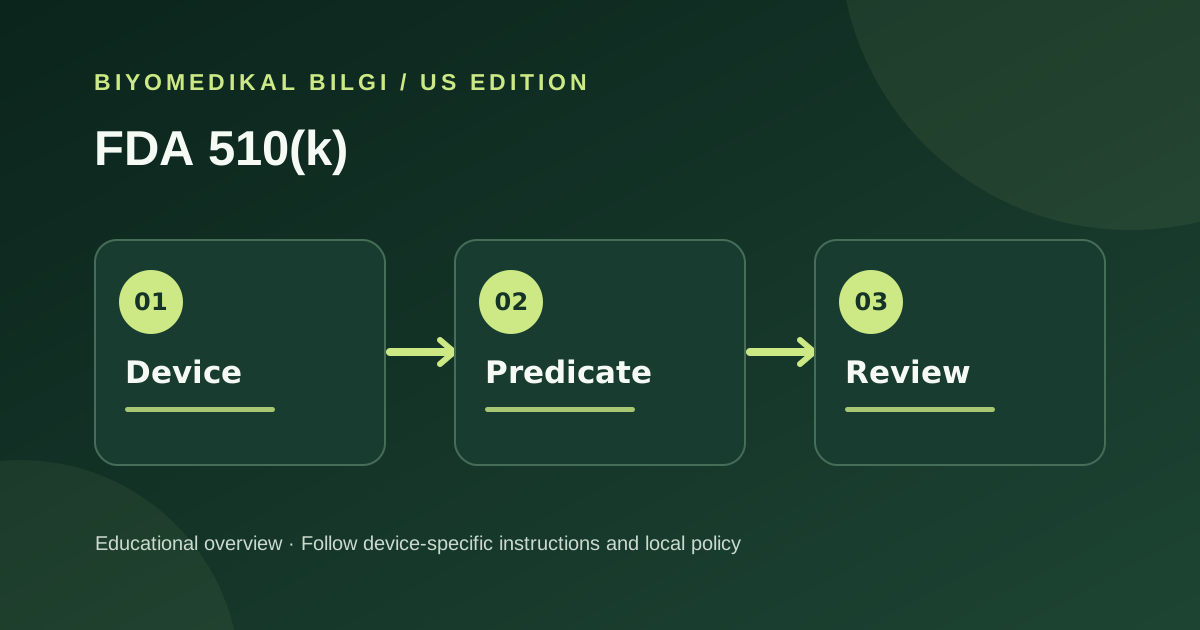
A 510(k) is a premarket submission used, when required, to show that a device is substantially equivalent to a legally marketed predicate. A favorable FDA decision clears the device for commercial distribution; it is different from premarket approval.
The core question
The manufacturer identifies a predicate and provides evidence for substantial equivalence under the applicable FDA framework. The specific intended use, technological characteristics, and any differences matter. The 510(k) pathway is not a generic quality badge for every claim a marketer might make.
Who needs to submit
FDA explains that requirements depend on device classification, exemptions, and whether a premarket approval application is needed. A Class I or II label does not automatically answer the question. Manufacturers should check the device-specific rules and current guidance.
Verify a marketing statement
Ask for the 510(k) number, manufacturer, model, intended use, and FDA decision. Compare the public decision summary to the claim being made. A similarly named product or accessory may have a different status.
Language that avoids confusion
Use “FDA cleared” for an applicable 510(k) substantial-equivalence order. Reserve “FDA approved” for the applicable approval pathway. If the regulatory status is uncertain, say so rather than converting a press release into a claim of approval.
Practical decision aid
- Verify the specific 510(k) number and compare manufacturer, product, intended use, and decision date with the marketing claim you are reviewing.
- Separate the FDA decision from performance claims not covered by that decision. Clearance is not a blanket endorsement of every use or advertisement.
- If an accessory or software version is central to the claim, check whether it is within the documented device description; do not assume a shared brand name is enough.
Primary sources
We reviewed the following original agency publications for this guide. Check the linked source for its latest version and any device-specific updates.
Educational technical information only. It does not replace a manufacturer service manual, hospital policy, regulatory advice, or a clinician’s judgment.
See an error? Request a correction.