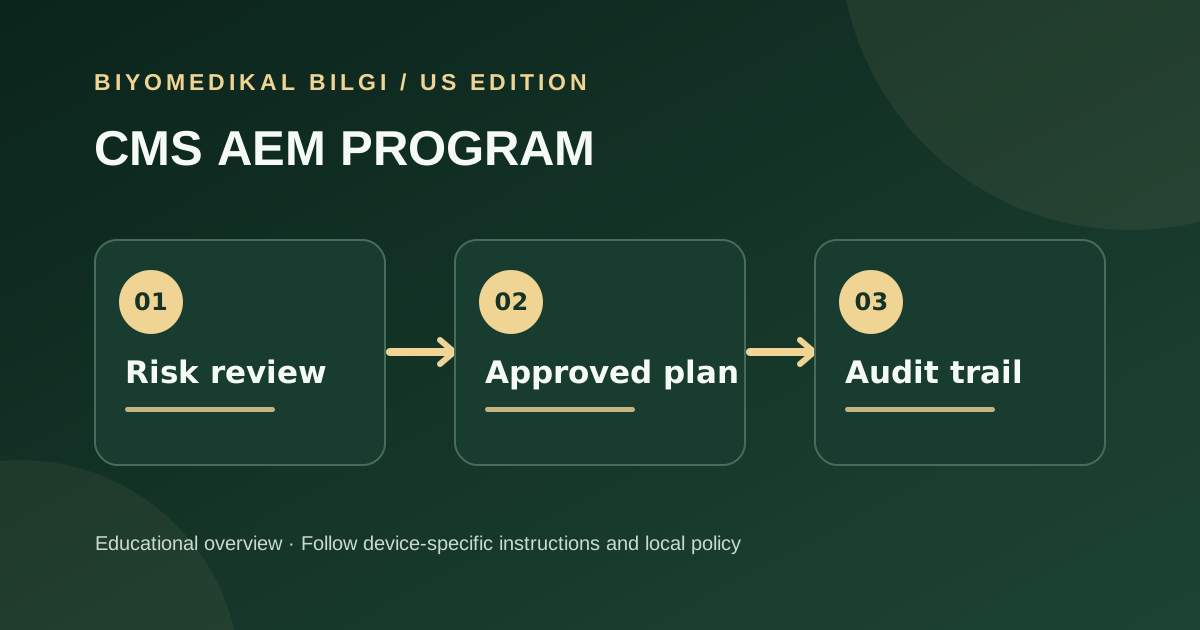
An AEM program is a documented hospital process for using maintenance activities or frequencies that differ from manufacturer recommendations when CMS permits it. It requires a qualified, risk-based assessment and consistent records; it is not a blanket permission to skip maintenance.
Why AEM exists
CMS recognizes that some hospitals can justify an alternative maintenance strategy using qualified personnel, equipment history, and generally accepted practice. The hospital still must maintain equipment at an acceptable level of safety and quality. The decision belongs to the facility’s formal program, not to an individual technician at the workbench.
Check eligibility before changing a schedule
CMS guidance identifies situations in which manufacturer recommendations or other requirements must be followed, including relevant federal or state law and certain equipment categories. Imaging and radiologic equipment, medical laser devices, and new equipment without sufficient maintenance history receive special attention in the CMS memo. Review the current CMS State Operations Manual and local conditions before placing any asset in AEM.
Document the reasoning
A defensible record connects the device or equipment class, risk assessment, service history, alternative activities and frequency, qualified decision makers, and subsequent results. Keep the manufacturer’s recommendations available so that the difference is explicit. If repeated failures or a recall changes the risk, revisit the decision.
Operational boundary
AEM is a maintenance-policy framework, not a clinical claim that the device is safe in every circumstance. This overview is for planning discussions; the facility’s compliance and clinical engineering leaders should approve the actual program.
Practical decision aid
- List each proposed asset class and check whether the CMS guidance, another rule, or its lack of history prevents an alternative schedule. Document that eligibility decision before calculating an interval.
- Keep the manufacturer recommendation next to the proposed alternative, the risk rationale, the supporting maintenance data, the approver, and a date for re-evaluation.
- Define triggers that reopen the decision: a new failure pattern, recall, configuration change, or updated manufacturer information. AEM is an ongoing program, not a one-time waiver.
Primary sources
We reviewed the following original agency publications for this guide. Check the linked source for its latest version and any device-specific updates.
Educational technical information only. It does not replace a manufacturer service manual, hospital policy, regulatory advice, or a clinician’s judgment.
See an error? Request a correction.