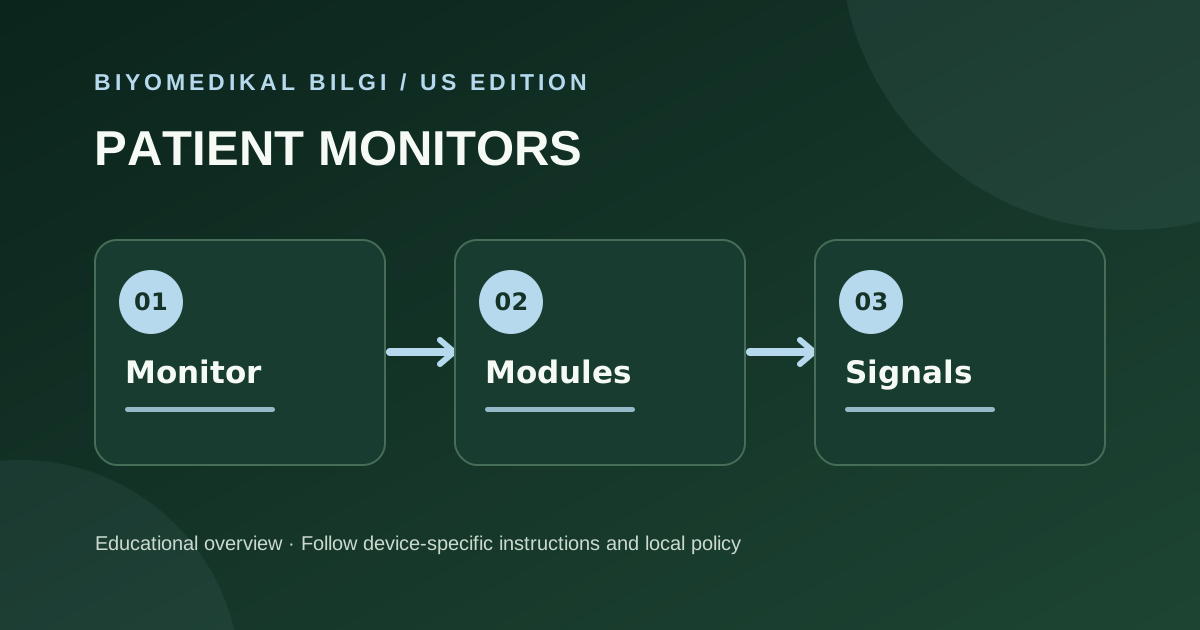
Patient monitor maintenance should follow the exact model’s instructions and the hospital’s approved plan. A service record needs enough detail to show which monitor, modules, accessories, tests, results, and software state were involved.
Define the device boundary
A bedside monitor may combine a main unit, parameter modules, display, batteries, docking hardware, leads, cuffs, sensors, and network connections. A label on the main unit alone does not identify every accessory involved in a complaint. Record the configuration tested.
Inspect and test against the right instructions
Start with the manufacturer’s current instructions and local maintenance policy. Record physical condition, power and battery observations, applicable functional tests, alarm behavior, and any model-specific checks. Use the correct simulator and document its identity and calibration status where relevant. Avoid copying acceptance limits from a different model.
Include software and network context
A monitor may exchange data with central stations or electronic records. If a complaint concerns missing data, record network and interface symptoms and coordinate with IT; do not assume a physiological module failed. FDA identifies cybersecurity as a shared responsibility between manufacturers and healthcare delivery organizations.
Escalate anomalies
A failed or ambiguous test should lead to the facility’s documented out-of-service and clinical notification process. If a cybersecurity alert or recall applies, record the affected model and the manufacturer or FDA action before returning equipment to use.
Practical decision aid
- Record all modules and accessories in the tested configuration. A complaint about a cuff, lead, sensor, or central station may not be explained by testing only the bedside display.
- Document the simulator and procedure version alongside results. This makes a later comparison meaningful when software, modules, or test instruments change.
- For missing data, compare device-side observations with network and central-system reports, then involve the appropriate IT owner rather than replacing a physiological module on assumption.
Primary sources
We reviewed the following original agency publications for this guide. Check the linked source for its latest version and any device-specific updates.
Educational technical information only. It does not replace a manufacturer service manual, hospital policy, regulatory advice, or a clinician’s judgment.
See an error? Request a correction.